Dear Yogis,
Becoming more flexible through stretching is often seen as one of the key benefits of a yoga practice. But flexibility is not only about the body. It is also about the mind—the ability to adapt to change, stay open, and respond more easily to new situations.
How do you experience your own flexibility Body&Mind? Do you enjoy stretching poses, and are you familiar with the different ways of stretching ?
This blog is about introducing you to the various types of stretching.
Before we look at the techniques, let’s first understand how your body becomes more flexible. Your muscles mainly adapt through your nervous system—they simply learn to tolerate a deeper stretch.
Your fascia responds to slow, gentle loading and needs good hydration, which helps the tissue become more elastic and allows it to glide more freely.
1. Dynamic Stretching
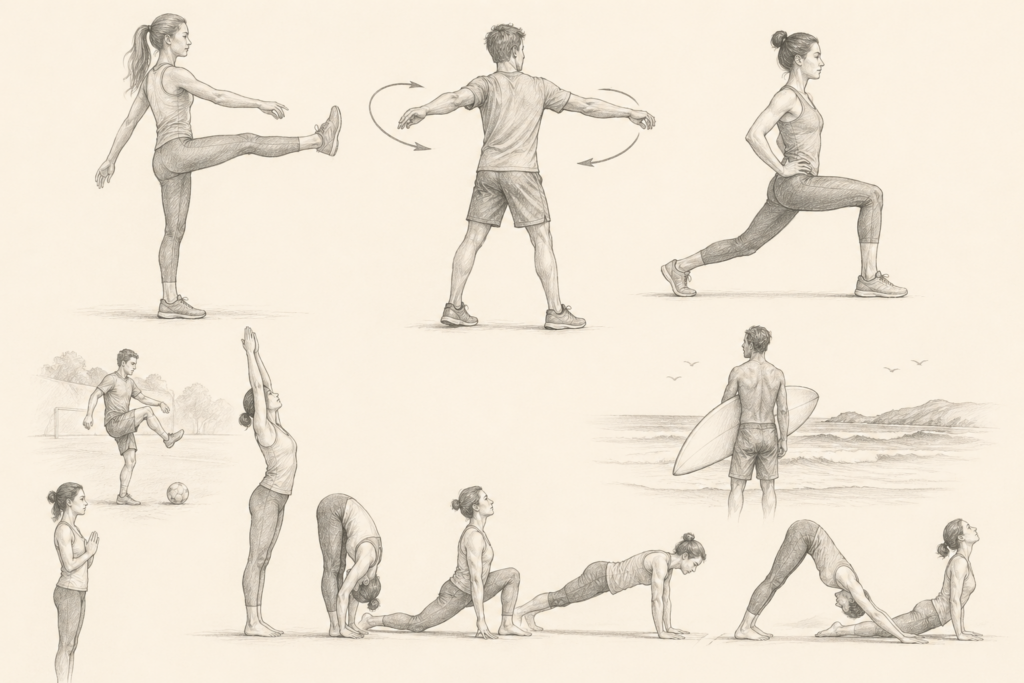
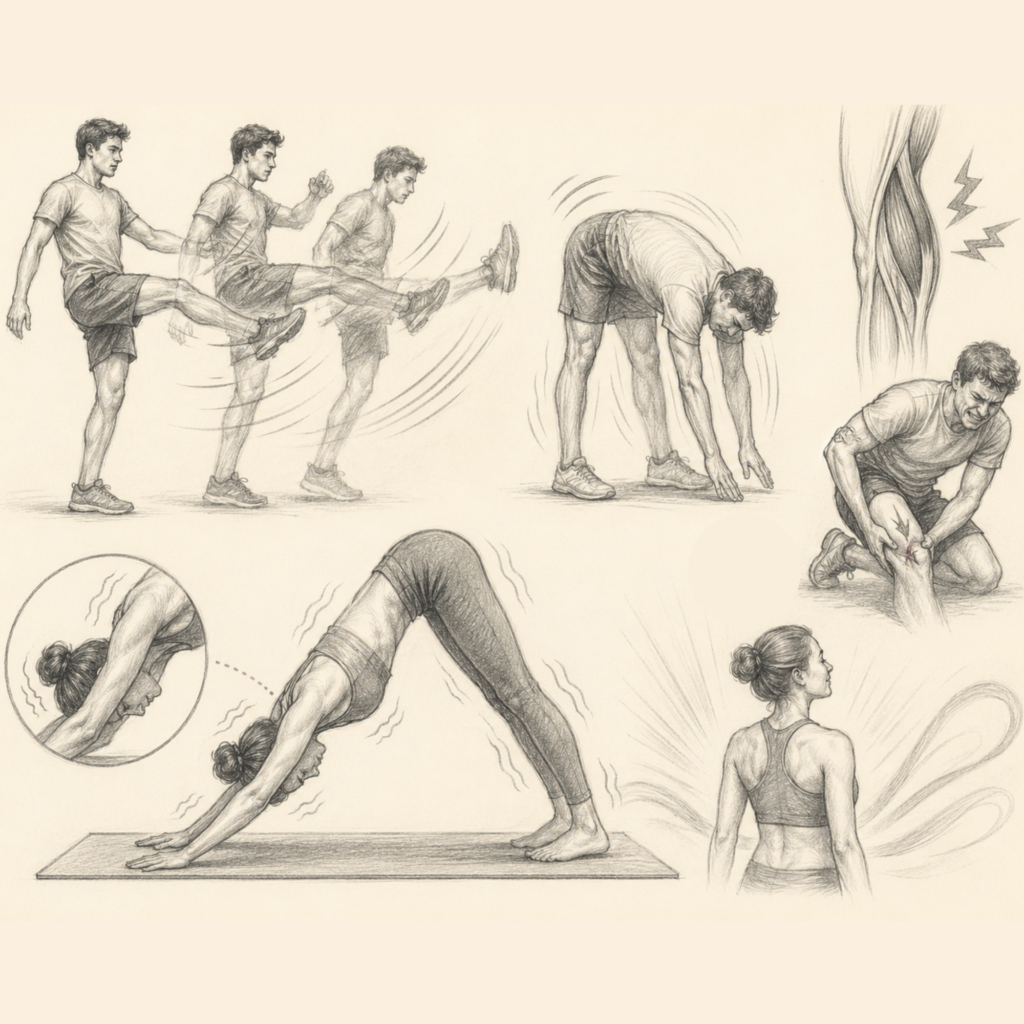
Are controlled, active movements that take joints through their full range of motion. For example leg swings, arm circles, walking lunges, and Yogic Sun Salutations help to warm up the body while stretching most major areas, including the shoulders, arms, spine, hips, and legs. You can see this in many sports—for example, soccer players warming up with dynamic stretches or surfers preparing before entering the water.
Dynamic stretching improves performance and reduces injury risk by warming up the body, increasing blood flow, and preparing muscles for movement.
2. Static Stretching
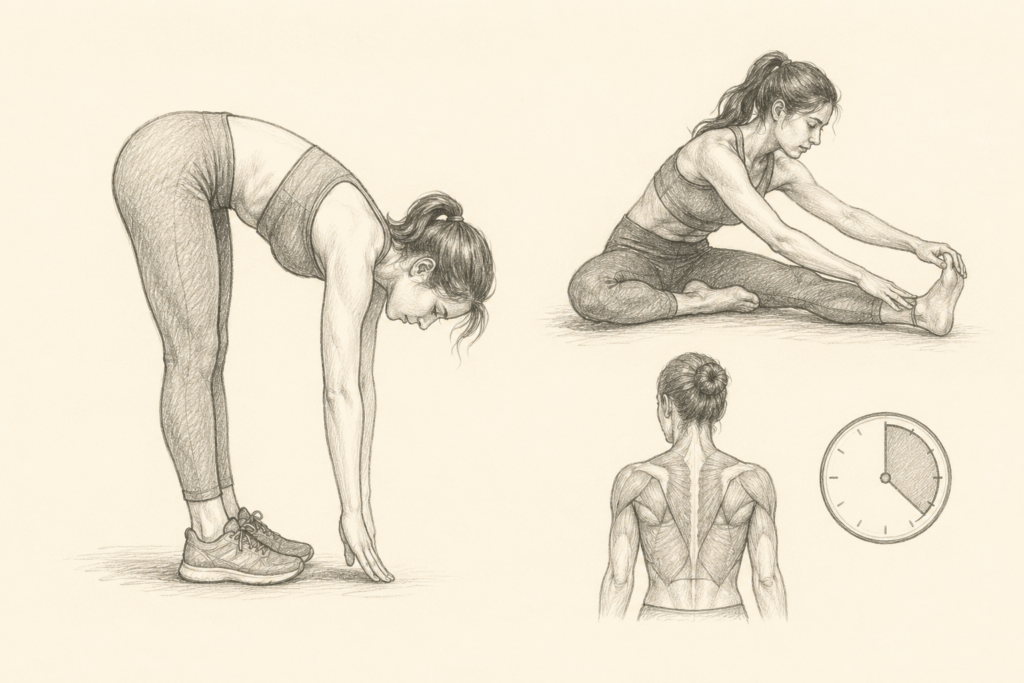
Static stretching means you hold a position for a period of time, usually between 20 and 60 seconds, such as reaching down to touch your toes and staying there.
As you stay in the pose and breathe deeply, your body gets time to adapt. This can calm the nervous system, release muscular tension, and gently support connective tissues like fascia, tendons, and ligaments.
Static stretching helps improve flexibility and reduce stiffness, so it is often best practiced after exercise rather than before intense activity.
Yin Yoga uses the same principle, but poses are held much longer—usually 3 to 5 minutes. This gives you more time to relax, stay with your breath, and gently reach deeper tissues such as fascia and joints.
4. PNF Stretching (Proprioceptive Neuromuscular Facilitation)
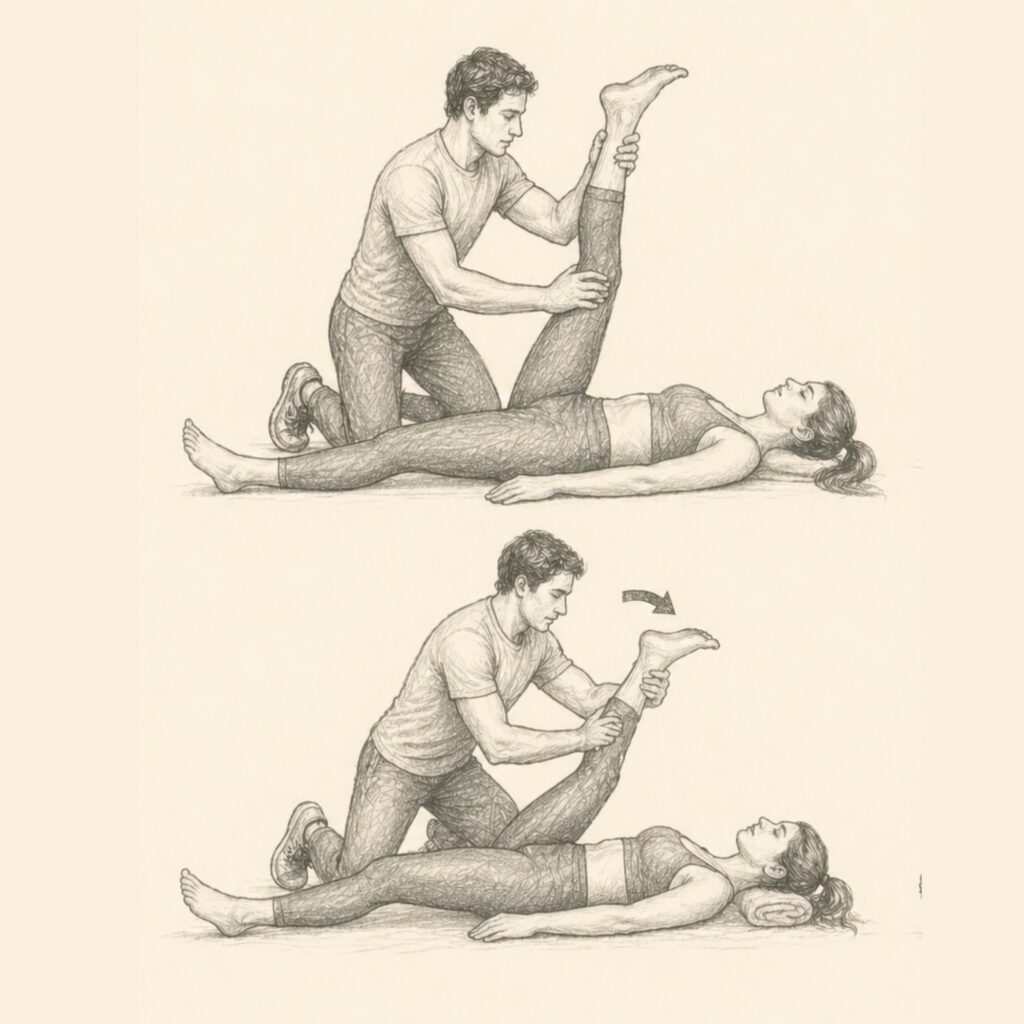
PNF stretching is a technique often used in physical therapy, especially after periods of immobility. It combines gentle muscle contraction with stretching.
You begin by lightly contracting the muscle for a short time (around 5–10 seconds), then relax and move deeper into the stretch.
This method helps improve flexibility more effectively by working with the body’s natural response to tension and release. PNF stretching is effective, but also more complex and usually requires guidance or a partner to perform correctly.
3. Ballistic Stretching
Ballistic stretching is the old-school “bouncing” style many of us remember from school sports. It uses fast, repeated movements to push a muscle beyond its normal range.
Honestly, I’m not a big fan of treating your muscles like elastic bands, it can feel forced. But gentle, controlled shaking or small micro-movements, for example in Downward-Facing Dog, can help you release tension and find more ease in the stretch.
Ballistic stretching may improve flexibility and coordination, but it also carries a higher risk of injury when done without control. That is why it is mainly used by trained athletes with guidance and is not recommended for most people
5. Active Stretching
Active stretching means you use your own muscle strength to hold a position. For example, you lift and hold your leg, balance in Warrior III, or stay in Boat Pose.
As you do this, you are not only improving flexibility, but also building strength, control, and stability. That is why active stretching is especially useful in yoga and supports functional movement in daily life.
6. Passive Stretching
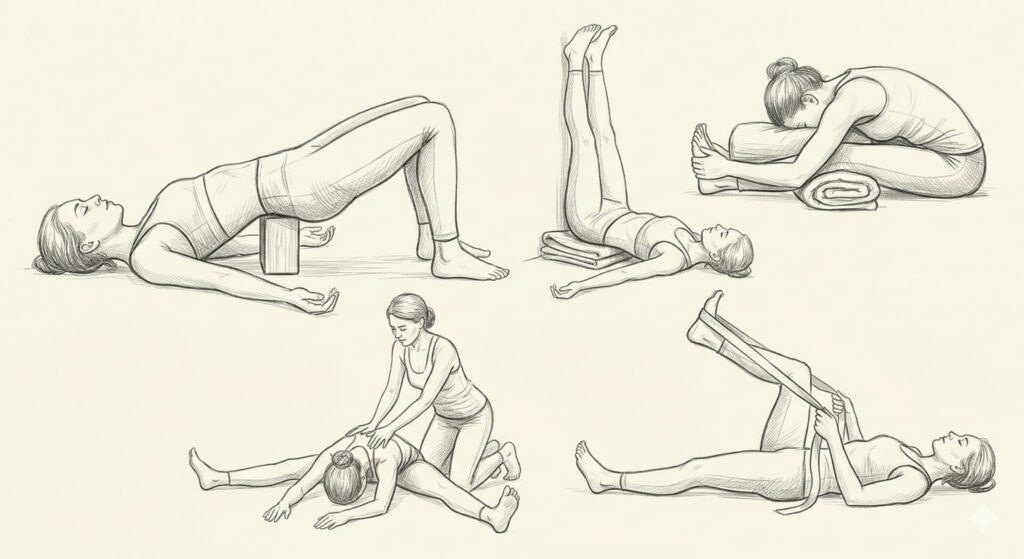
Passive stretching is when you use something outside your own muscles to help you stretch, like gravity, props, or even a teacher’s assistance.
You simply relax into the position and let the support take you deeper. In yoga, this often looks like longer-held, supported poses using blocks or straps, where you can fully relax and allow tension to release while your body gently opens.
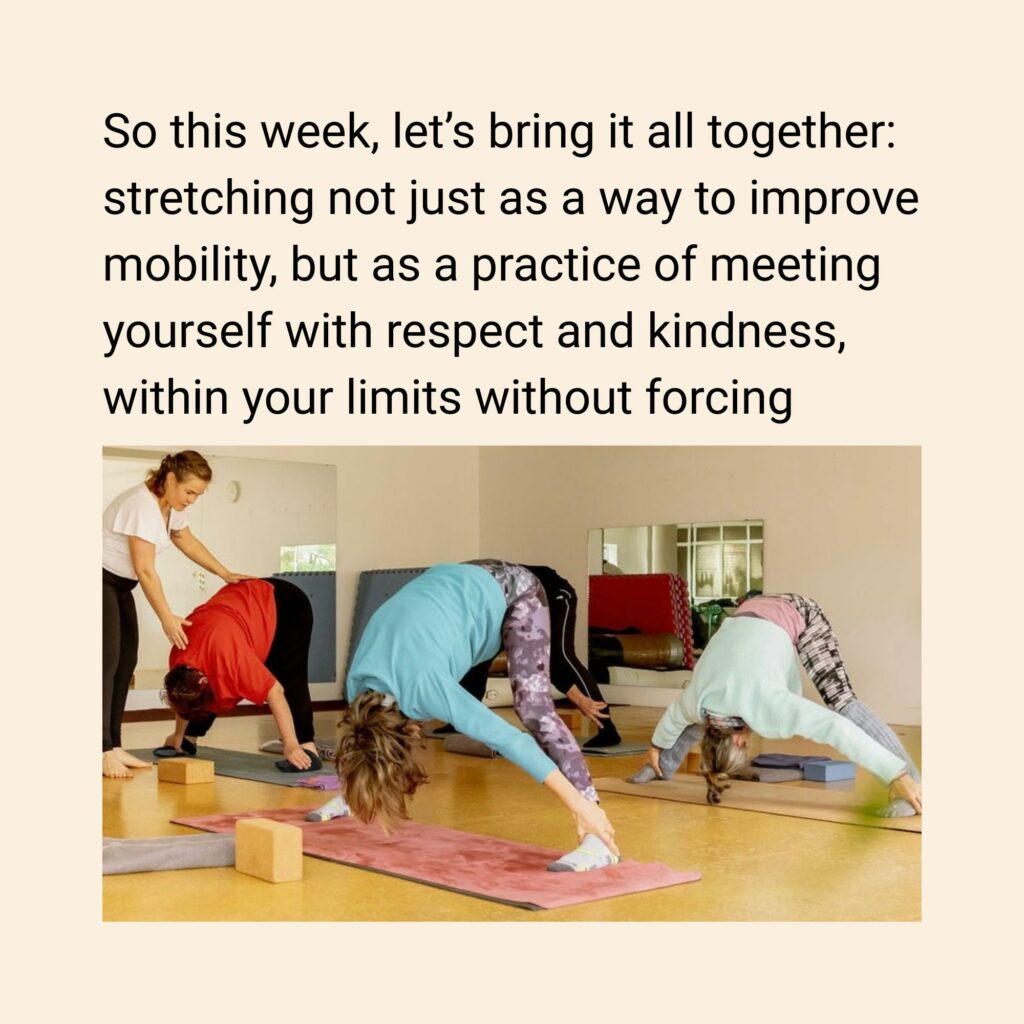
Remember, flexibility comes from consistency, not intensity; dynamic stretching before movement, static after, and combining methods works best. Most importantly, body and mind are always connected—so move with awareness.
I’m looking forward to welcoming you Tuesdays and Thursdays at 10 am to our Yoga Session in Caldas da Rainha.
Be flexible in Body and Mind. Andrea Stern