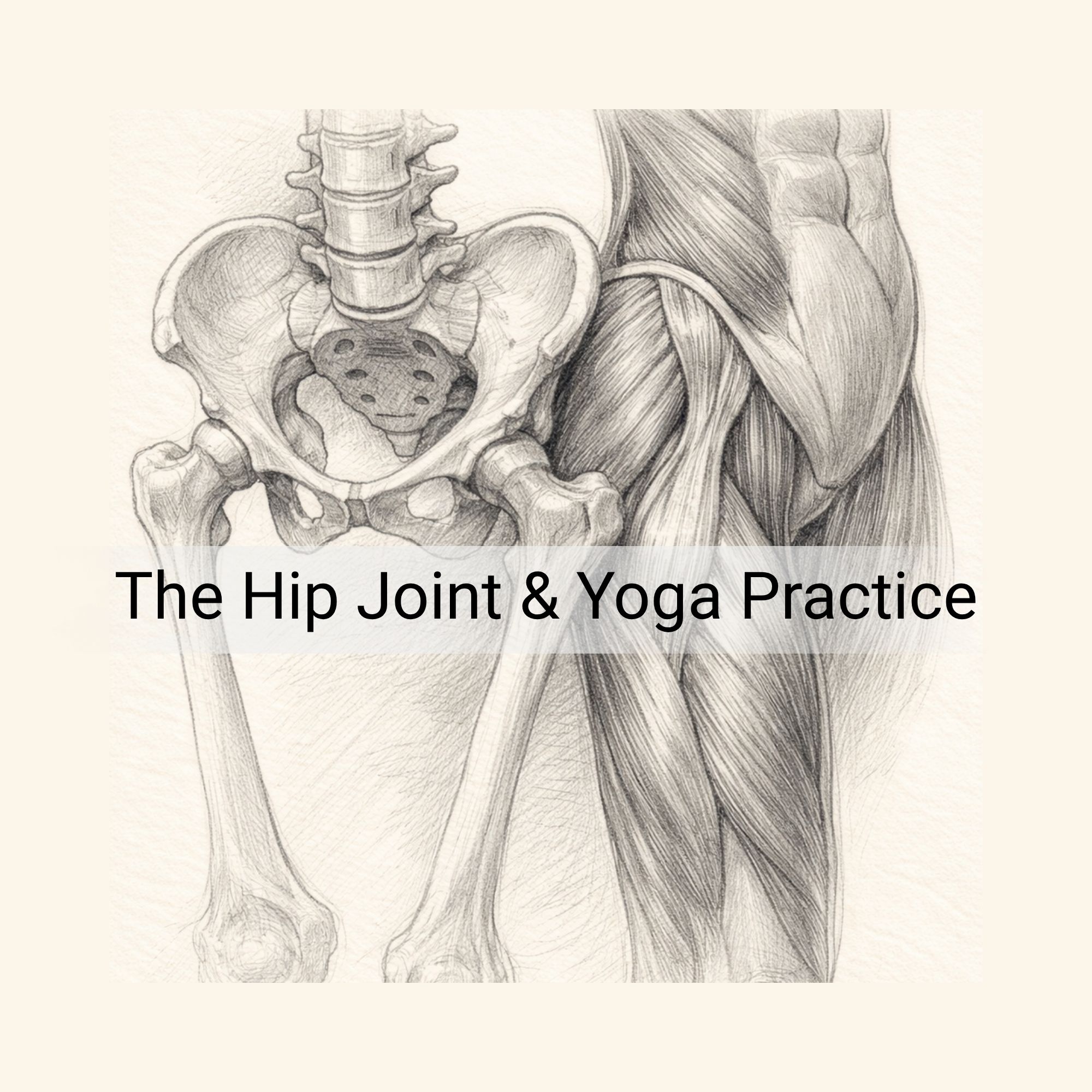
The hips are one of the central bridges between the lower and upper body. They transfer force, stabilize movement, and allow mobility, which is essential for everyday activities such as walking, sitting, and yoga practice.
Understanding the anatomy of the hip joint can deepen your yoga practice, help prevent injury, and support you in moving with greater awareness and efficiency.
The Anatomy of the Hip Joint
The hip is a ball-and-socket joint, formed where the head of the femur (thigh bone) fits into the acetabulum of the pelvis. Because of its structure, the hip joint can move in multiple directions:
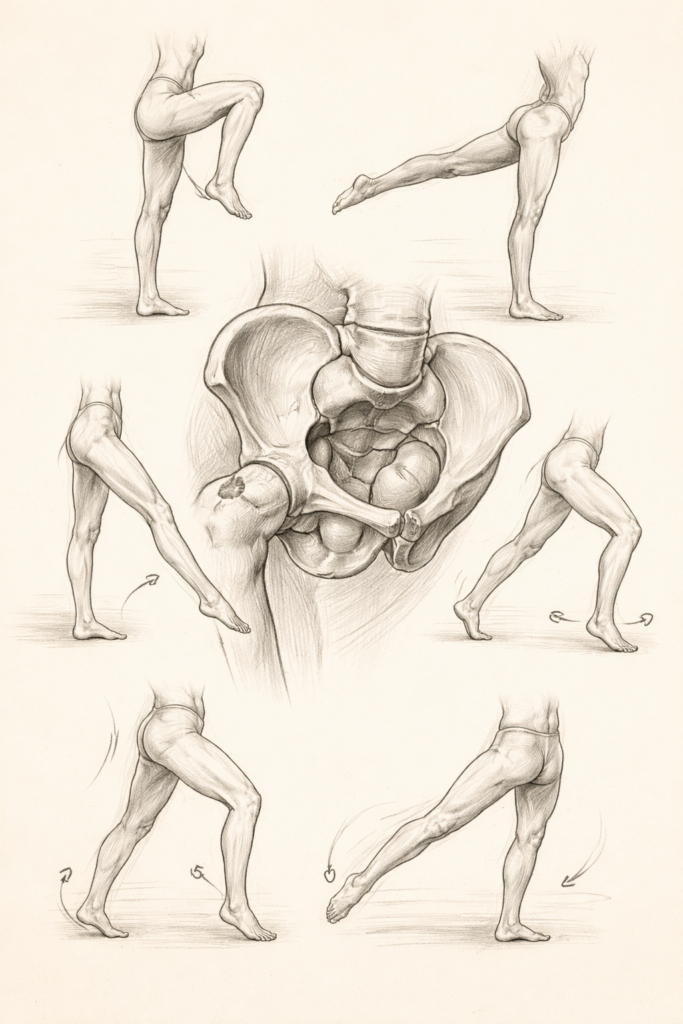
- Flexion (bringing the thigh toward the torso)
- Extension (moving the leg backward)
- Abduction (moving the leg away from the midline)
- Adduction (bringing the leg toward the midline)
- Internal rotation
- External rotation
The Hips as a Bridge in the Body
In yoga, the hips act as a bridge between the grounded lower body—providing stability and connection—and the upper body, allowing movement, breath, and expansion.
Your hips integrate these two worlds. When they are too tight, movement becomes restricted, and the knees or lower back may compensate. When they are too loose without strength, stability is reduced, which can lead to imbalance and potential injury.
This is why we focus on a balanced yoga practice that develops both mobility and stability in the hips.
- Mobility: the ability to move freely through a range of motion
- Stability: the ability to control and support that movement
If you focus only on stretching, you may create instability. If you become too rigid, you limit movement and create strain. Yoga helps you develop both qualities together—mobility and stability in balance.
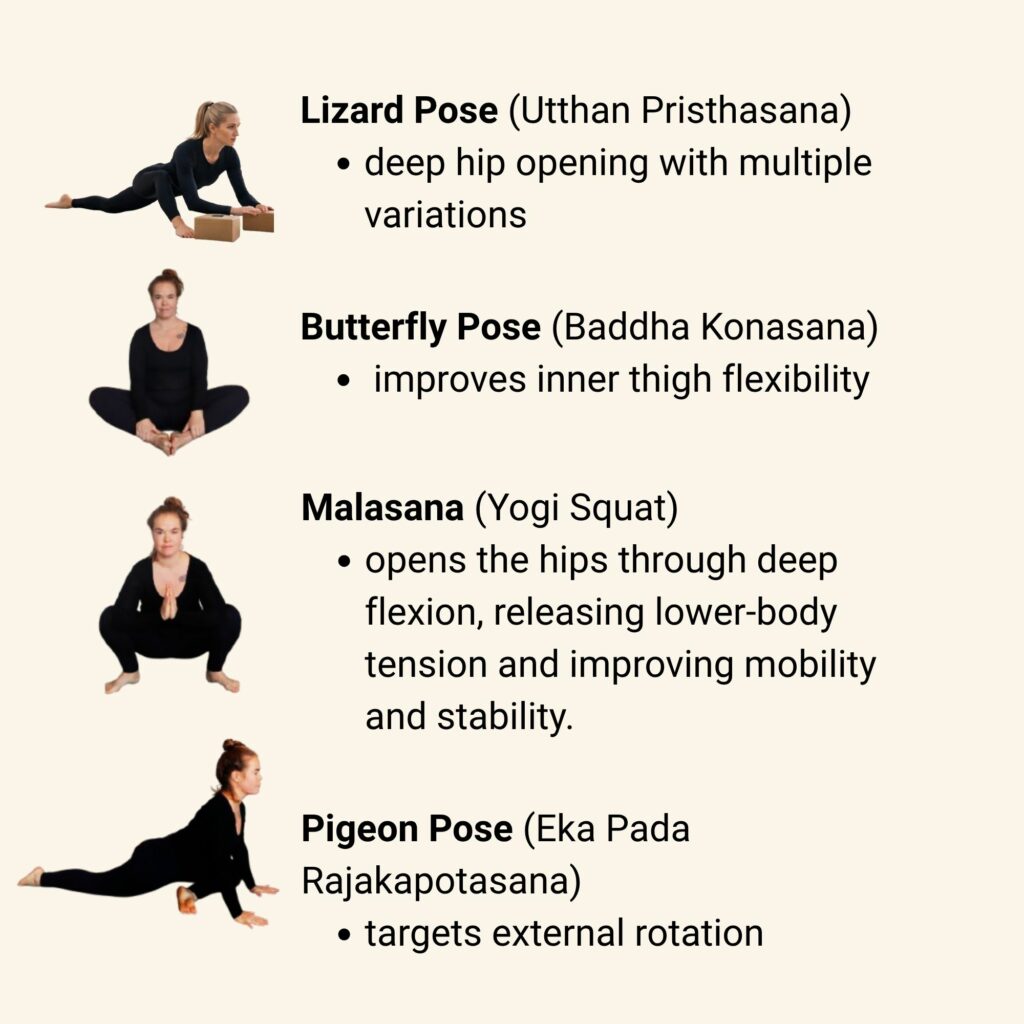
This Yoga Poses Yoga Support your Hip Mobility
These postures lengthen and relax the hip muscles, improving mobility by increasing range of motion and releasing tension.
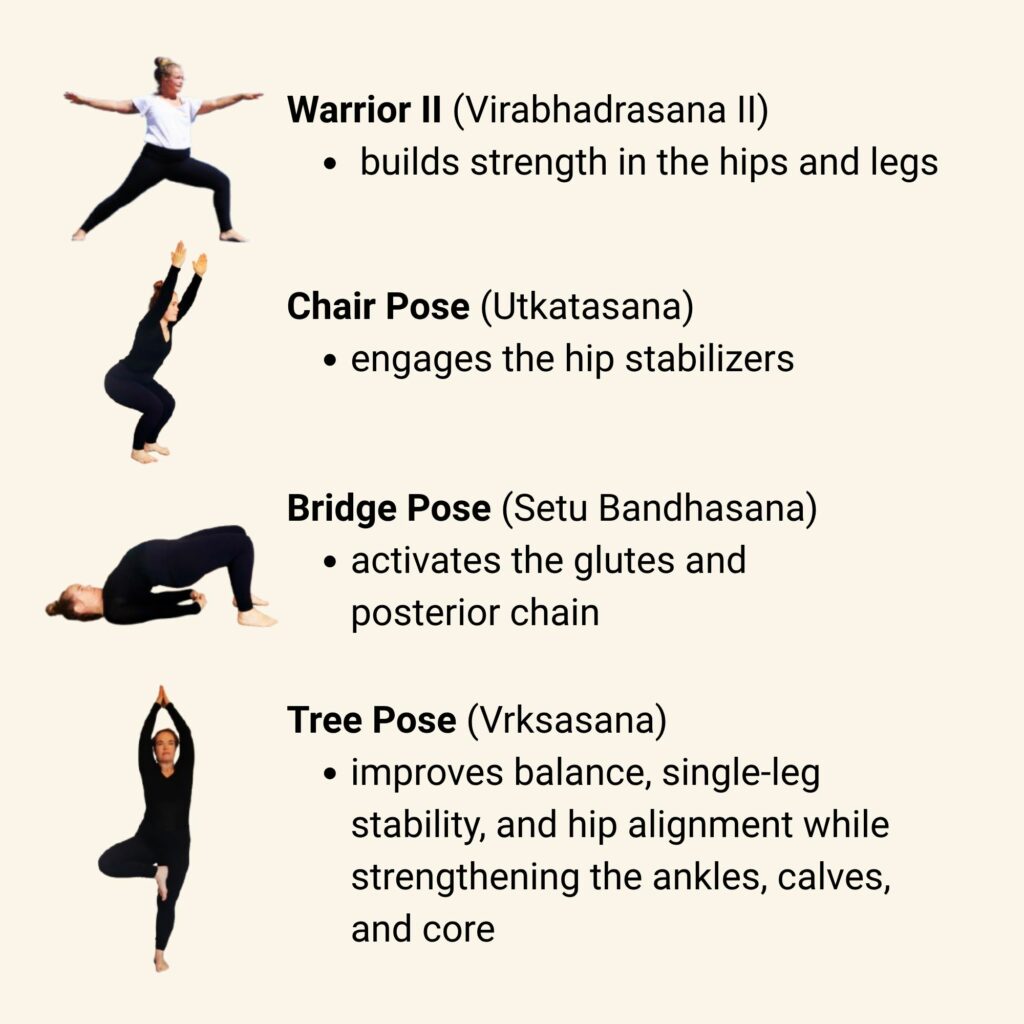
This Yoga Poses help you to Build Hip Stability
Equally important are poses that strengthen and stabilize the hip joint by training the muscles to support it, especially under load and during dynamic movement
The hips are not just something to “open”—they’re a central hub for movement, stability, and integration in your body. From a somatic and fascial perspective, tension in your hips can also connect to your jaw and face, showing how stress can travel through the body. So when you clench your jaw or feel tight under pressure, your hips may be involved too.
When you approach the hips with balance and awareness, you can transform your yoga practice, making it safer, stronger, and more fluid. By supporting both mobility and stability, you create healthier joints and a deeper connection between your upper and lower body, letting movement flow with strength, ease, and intention.
I’m really looking forward to welcoming you to our yoga practice, where we’ll explore how to both mobilize and stabilize your hips and have a fun along the way.
Thank you,
Andrea