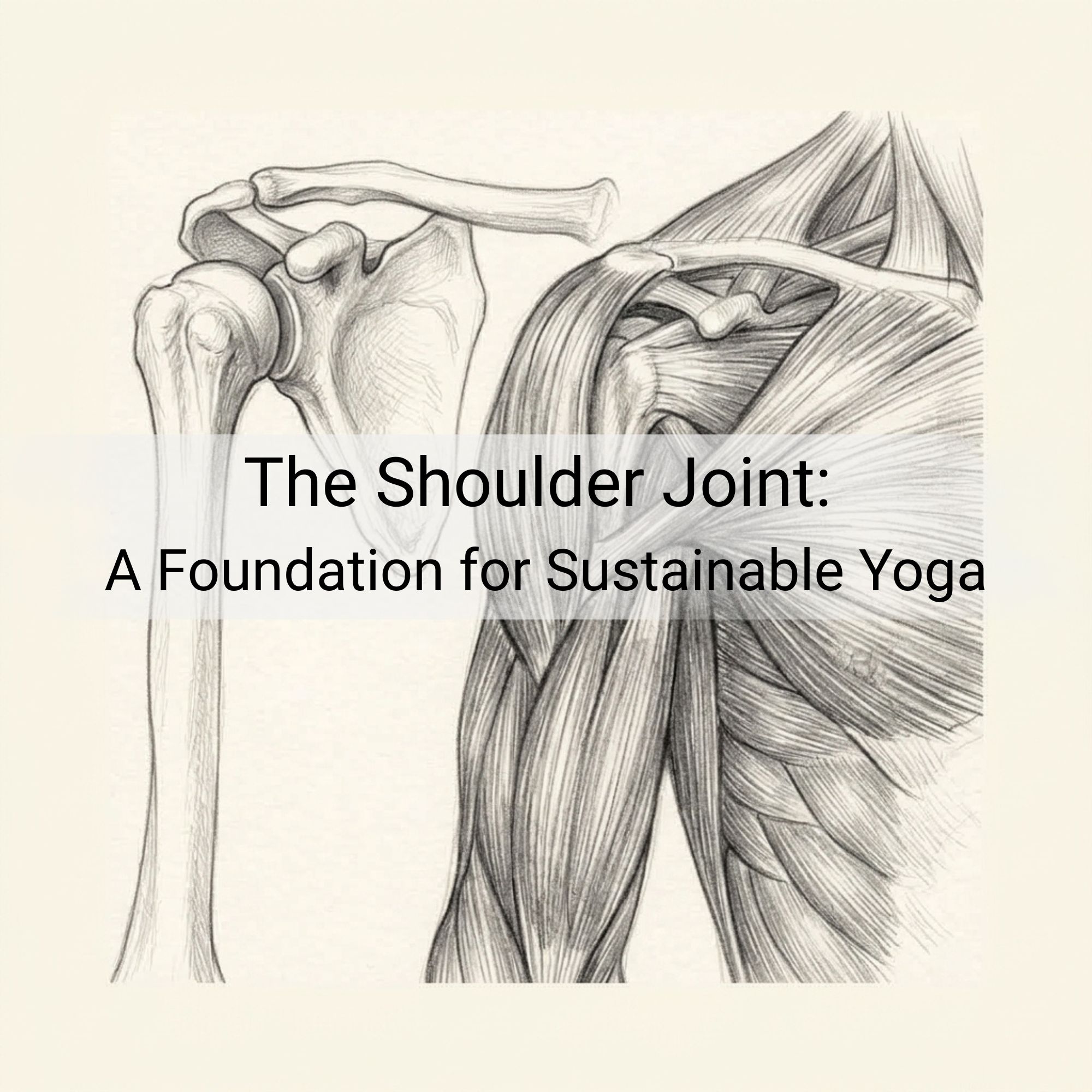
Your shoulders are one of the most mobile and complex areas of your body. They connect your arms to your trunk and allow you to reach, lift, push, pull, and support your body weight.
In yoga, your shoulders play an important role in many familiar movements, from reaching your arms overhead during Sun Salutations to supporting your body in Downward-Facing Dog, Plank, and Arm balances.
Here are key points about your Shoulder Joint :
The Anatomy of the Shoulder Joint
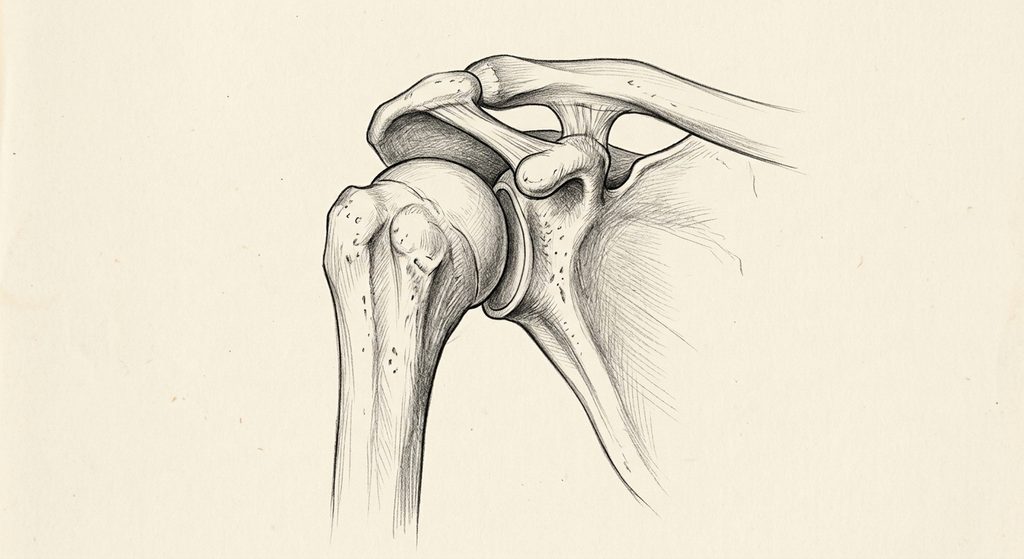
The main shoulder joint, called the Glenohumeral joint, is a ball-and-socket joint. It is formed where the head of the upper arm bone (humerus) meets the shallow socket of the shoulder blade (glenoid).
Unlike the hip, the shoulder socket is relatively shallow. This gives the shoulder a very large range of motion, but it also means that the joint relies heavily on the rotator cuff muscles, ligaments, and other surrounding structures for stability.
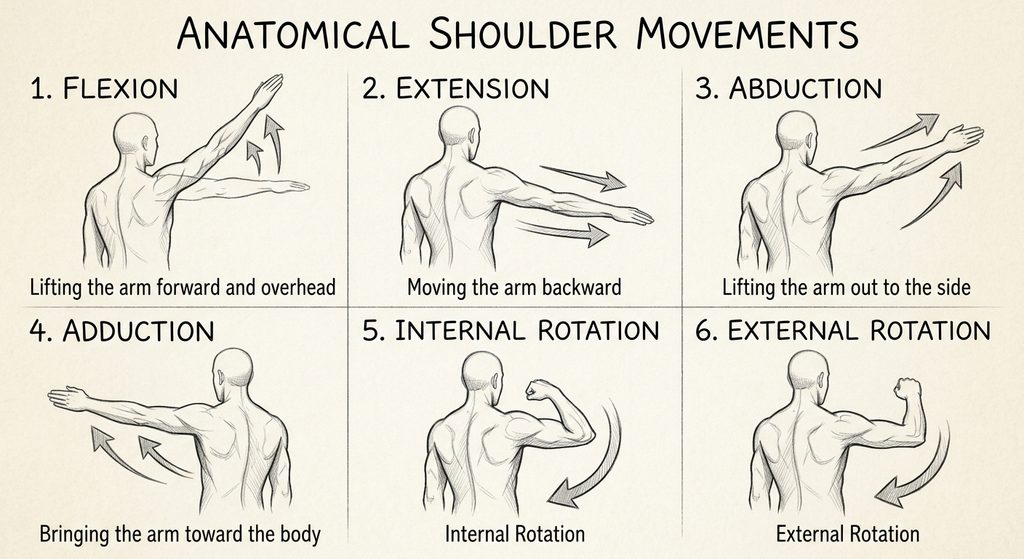
Shoulder Blades & Rotator Cuff
Healthy shoulder movement depends on your shoulder blades and rotator cuff muscles working together to keep your shoulder stable and controlled.
When you lift your arms overhead, your shoulder blades naturally move and rotate along your ribcage. Your rotator cuff helps stabilize the shoulder joint and control this movement.
This is especially important in yoga poses where your arms are overhead or supporting your body weight. For example, in Downward-Facing Dog, your rotator cuff and shoulder blade muscles work together to keep your shoulders stable while you support your body weight.
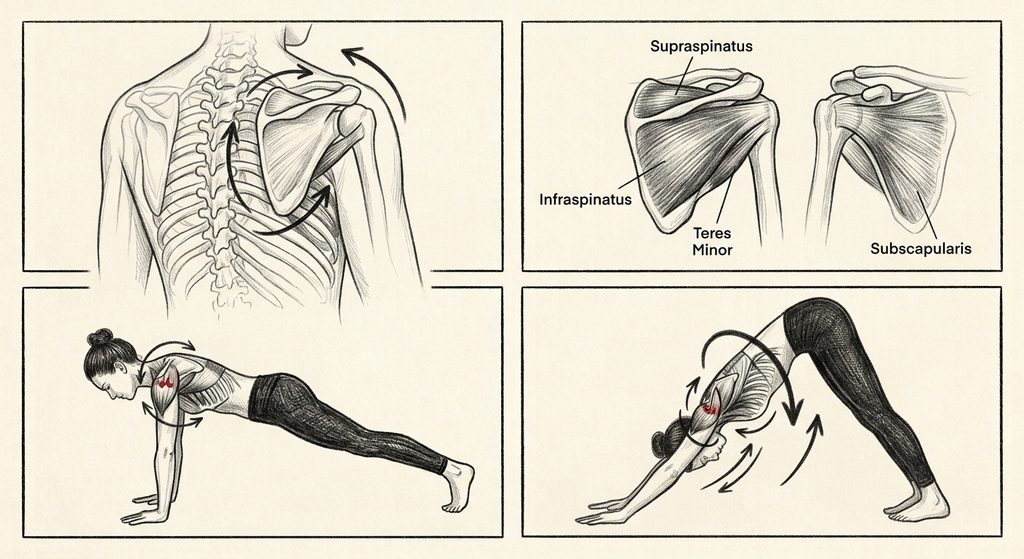
Your Shoulders as a Connection
Your shoulder does not work alone. Your shoulder blade, collarbone, upper arm, and ribcage work together to create smooth, controlled movement. This means healthy shoulder movement needs both mobility and stability:
- Mobility: moving freely through a comfortable range.
- Stability: controlling and supporting your shoulder during movement.
If mobility is limited, your neck or upper back may compensate. If you have mobility without enough strength and control, stability can be reduced. The goal is controlled mobility—moving freely while maintaining strength and support.
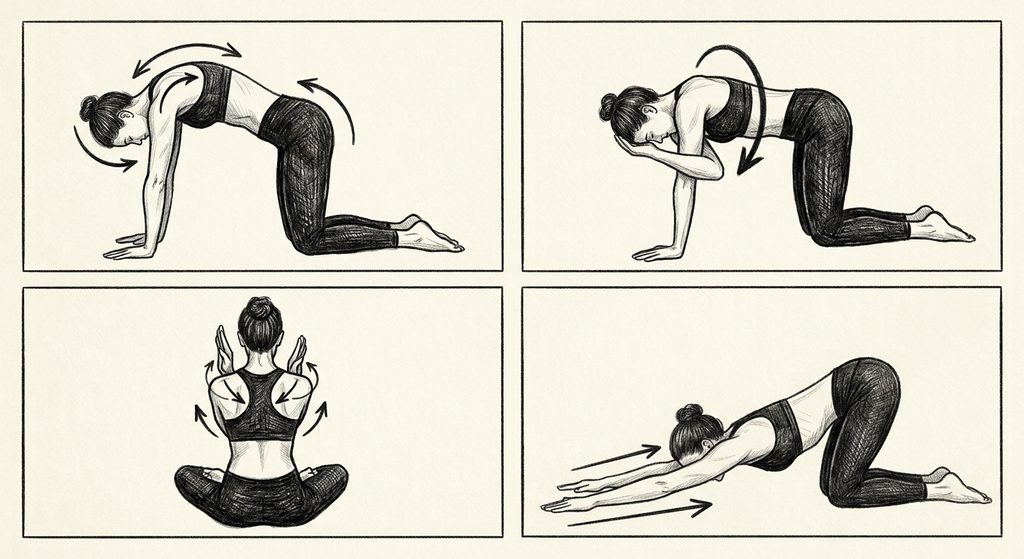
Yoga Poses That Support Shoulder Mobility
These poses help you move your shoulders freely, improve rotation, and open your chest and upper body.
- Cat–Cow – gently moves your shoulders and upper spine.
- Thread the Needle – improves shoulder rotation and releases tension.
- Eagle Arms (Garudasana Arms) – improves shoulder and upper-back mobility.
- Extended Puppy Pose – gently opens your shoulders and chest.
Yoga Poses That Help Build Shoulder Stability
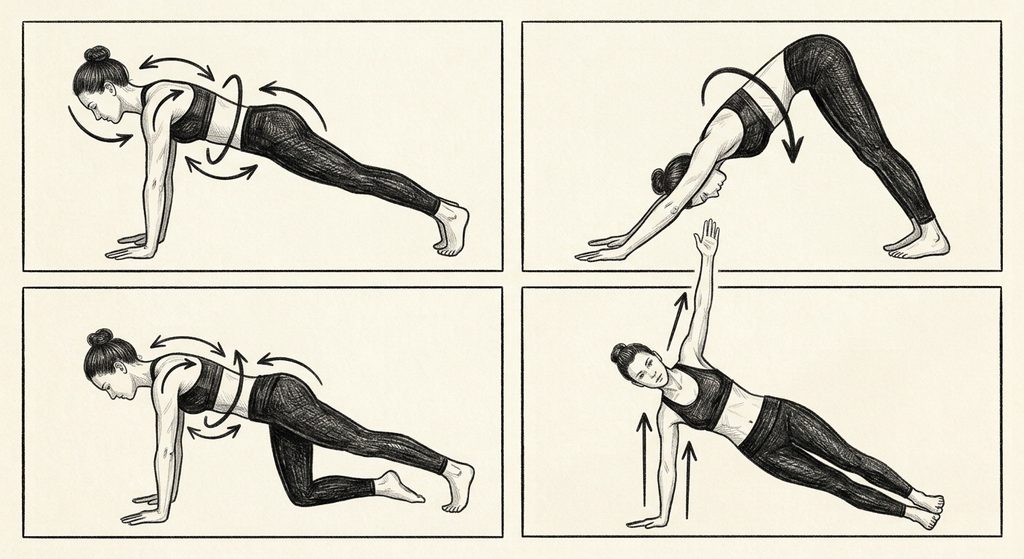
It is equally important to strengthen the muscles around your shoulder blades and shoulder joints. These poses help you support and control your arms, especially when your upper body is bearing weight.
- Plank Pose – strengthens your shoulders and arms while supporting your body weight.
- Downward-Facing Dog – builds shoulder stability through strength and controlled movement.
- Knee-to-Floor Plank – gently trains shoulder stability and control.
- Side Plank – strengthens your shoulder while challenging your balance and stability.
Shoulders, Neck and Upper Back
Your shoulders, neck, and upper back are closely connected. Stress and daily habits can create tension and affect how you move.
Yoga gives you the opportunity to become aware of this connection and find a better balance between mobility, strength, and stability.
Your shoulders are not just something to “open.” They are made to move, support, and connect.
With well-directed movement and regular practice, you can build stronger, more stable shoulders and move with greater freedom and ease.
I’m looking forward to exploring this with you in our yoga practice, mobilizing, strengthening, and stabilizing your shoulders while having some fun along the way!
Take care and enjoy your Yoga practice,
Andrea Stern